Deep Dive on the Bignoni
Exploring the remarkable Eremophila bignoniiflora and its colourful family of hybrids.
Not all Eremophila are created equal!
When we think of Eremophila, we often picture hardy, drought-tolerant plants that thrive in hot, dry conditions and demand excellent drainage.
But Eremophila bignoniiflora, affectionately known as the Bignoni, is a little different!
From drought-prone landscapes to seasonally flooded clay soils, this remarkable Australian native has an impressive ability to adapt to a variety of growing environments.
And if its resilience isn't impressive enough, the Bignoni has also played an important role in producing some of the most spectacular flowering hybrids in the Eremophila world.
Let's take a deep dive into the Bignoni!
Getting to know the Bignoni
Commonly known as Bignonia Emu Bush, Dogwood, Creek Wilga or River Berrigan, Eremophila bignoniiflora is a large shrub or small tree that can reach an impressive 9 metres in height.
Its long, narrow leaves are among the longest found in the Eremophila genus.
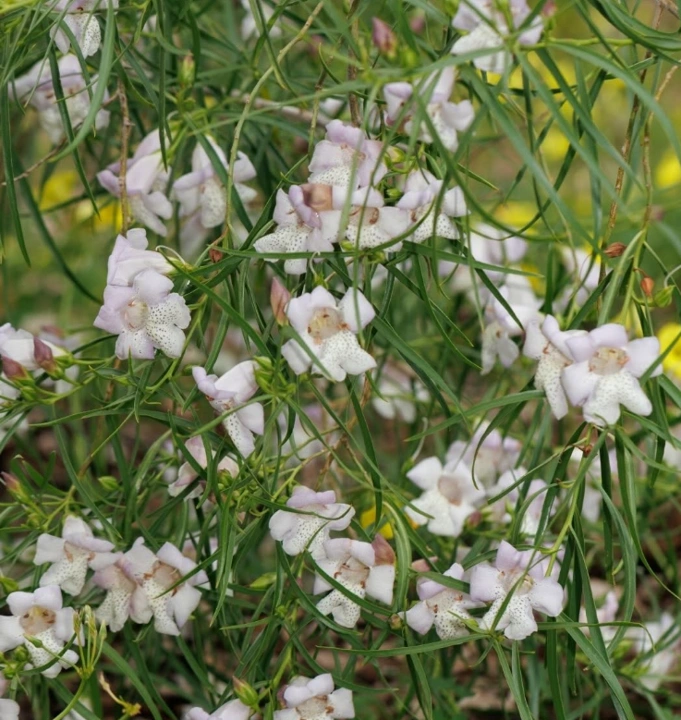
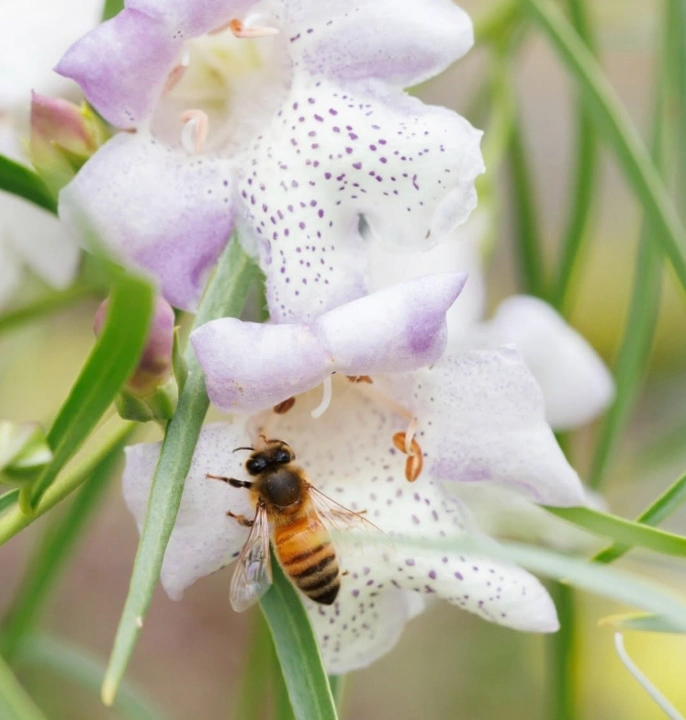
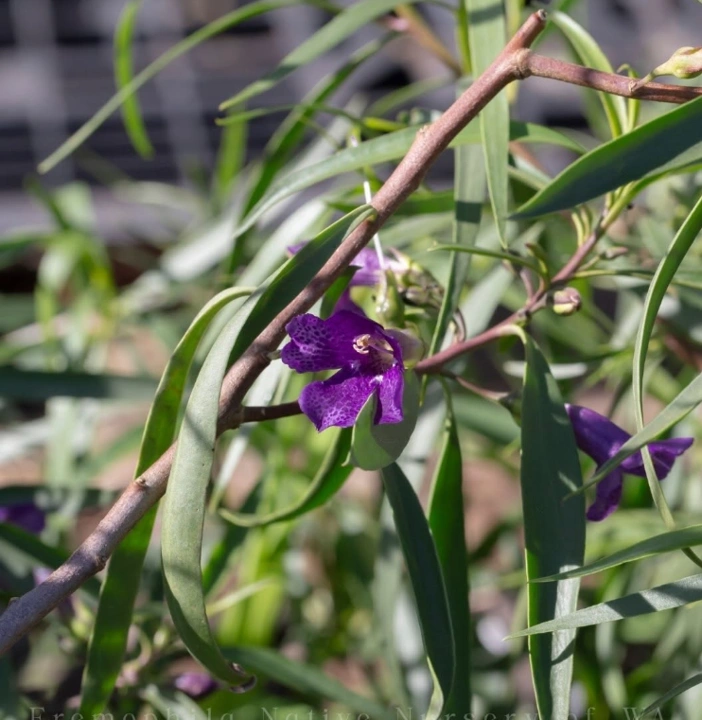
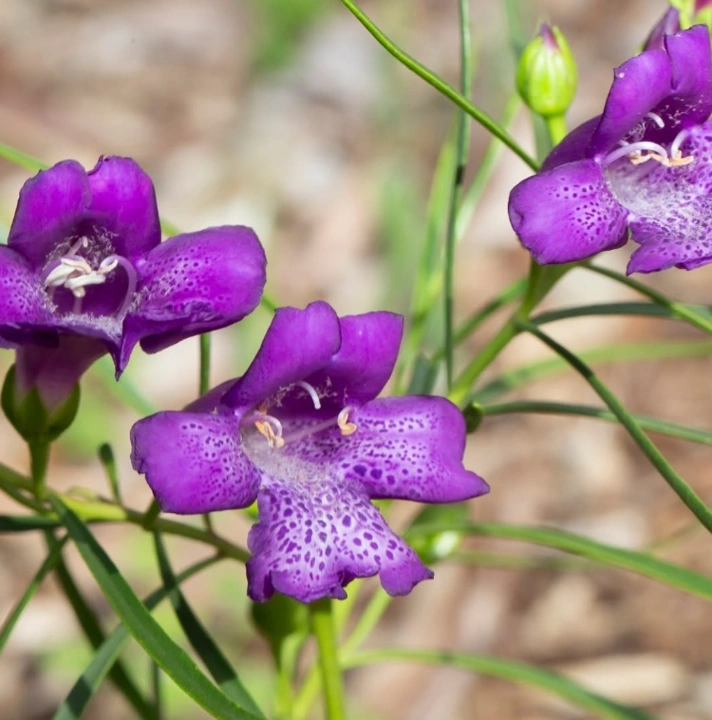
The flowers are another standout feature, they are relatively large for an Eremophila and range from pale cream through to beautiful shades of pink and purple.
The species name bignoniiflora comes from the Latin meaning Bignonia-flowered, referring to the flowers and how they resemble those from the Bignoniaceae family.
A native with an impressive range
The Bignoni can be found across mainland Australia, from Queensland and New South Wales, to South Australia and Victoria.
Some populations also occur in the Northern Territory and the top end of Western Australia.
E. bignoniiflora is characteristic of floodplains and major drainage systems.
It doesn't mind heavier clay soils along rivers, creeks and areas that might get a fair whack of seasonal rain.
This natural habitat gives us an important clue about what makes the Bignoni so special.
Not afraid of getting its feet wet!
Here's where the Bignoni really breaks the Eremophila mould.
Most Eremophila prefer decent drainage and can struggle when their roots remain wet for extended periods.
But the Bignoni is different.
Naturally occurring in floodplains, it has developed a tolerance for periodically wet and heavy soils that many other Eremophila simply don't possess.
It can grow in low-rainfall regions but is also capable of growing in areas receiving decent heavy rainfall.
This makes it particularly interesting for gardeners working with clay soils or environments where drainage can sometimes be challenging.
Of course, tolerating seasonal flooding doesn't mean the plant will thrive in permanently waterlogged conditions, but it certainly offers greater flexibility than many of its relatives.
Meet the Bignoni family
Perhaps one of the most exciting things about E. bignoniiflora is the wonderful collection of hybrids that have developed from it.
From enormous white flowers to rich crimson, hot pink and deep purple blooms, the Bignoni family showcases just how diverse Eremophila can be.
A note about cultivar names
Some of the hybrids featured below have been registered under specific cultivar names with the Australian Cultivar Registration Authority (ACRA).
For simplicity, we've used their botanical parentage and flower colours rather than individual cultivar names. The descriptions relate to particular selections, and other plants with the same parentage may have different characteristics.
1. Eremophila alternifolia × bignoniiflora — crimson form
This tall, attractive shrub produces striking crimson flowers, predominantly from late spring through summer.
It tolerates frost and some shade, although it really loves a sunny position. It is also well suited to clay soils.
One thing to watch for is prolonged dampness, which can encourage fungal problems.
2. Eremophila alternifolia × bignoniiflora — pink form
A lovely pink-flowered selection of this hybrid.
A close relative of the crimson form but has larger corollas and more open growth.
Its pink flowers bring a softer touch to the garden, while its elegant foliage and tall growth make it an attractive feature plant.
3. Eremophila bignoniiflora
The original species and the foundation of this extraordinary family.
Naturally found across parts of Queensland, New South Wales, the Northern Territory and northern Western Australia, it is associated with floodplains and clay soils.
It can reach heights of up to 9 metres and produces large flowers ranging from pale cream to deep pink, often during late spring and summer.
It also tolerates frost, making it surprisingly versatile for such a large native shrub or small tree.
4. Eremophila bignoniiflora × glabra subsp. carnosa
One particularly attractive selection of this hybrid.
Growing to approximately 3 metres tall, it produces beautiful pink to pink-orange flowers with a distinctive white-spotted throat.
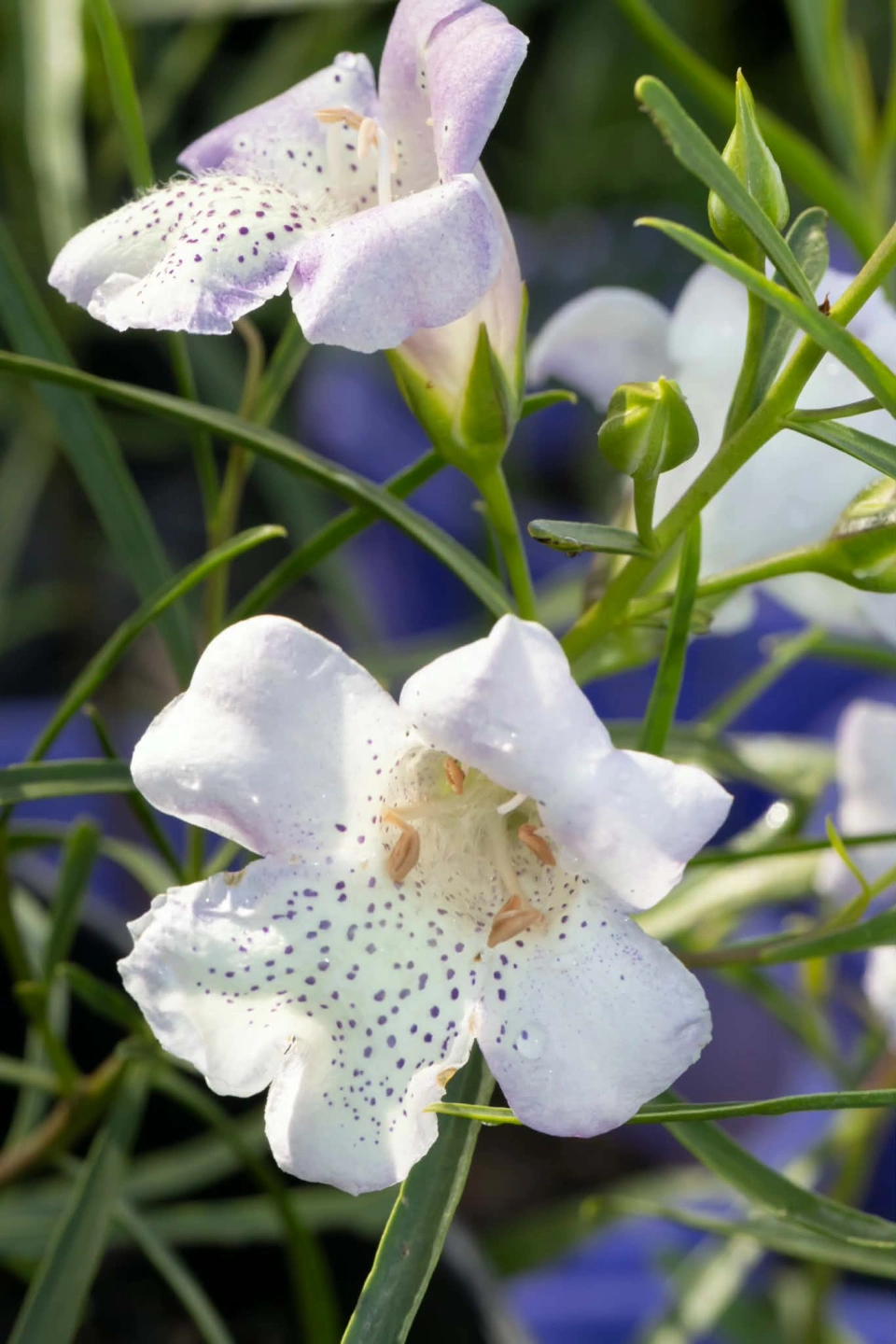
5. Eremophila bignoniiflora × polyclada — white form
If you love big Eremophila flowers, this one deserves your attention!
One striking white-flowered selection of this hybrid.
A substantial shrub or small tree that can potentially reach to 9 metres, produces magnificent white flowers decorated with lilac spotting.
Flowering is generally concentrated in late spring and summer.
It tolerates frost and some shade, although it prefers a sunny location.
Its large flowers make it a real standout.
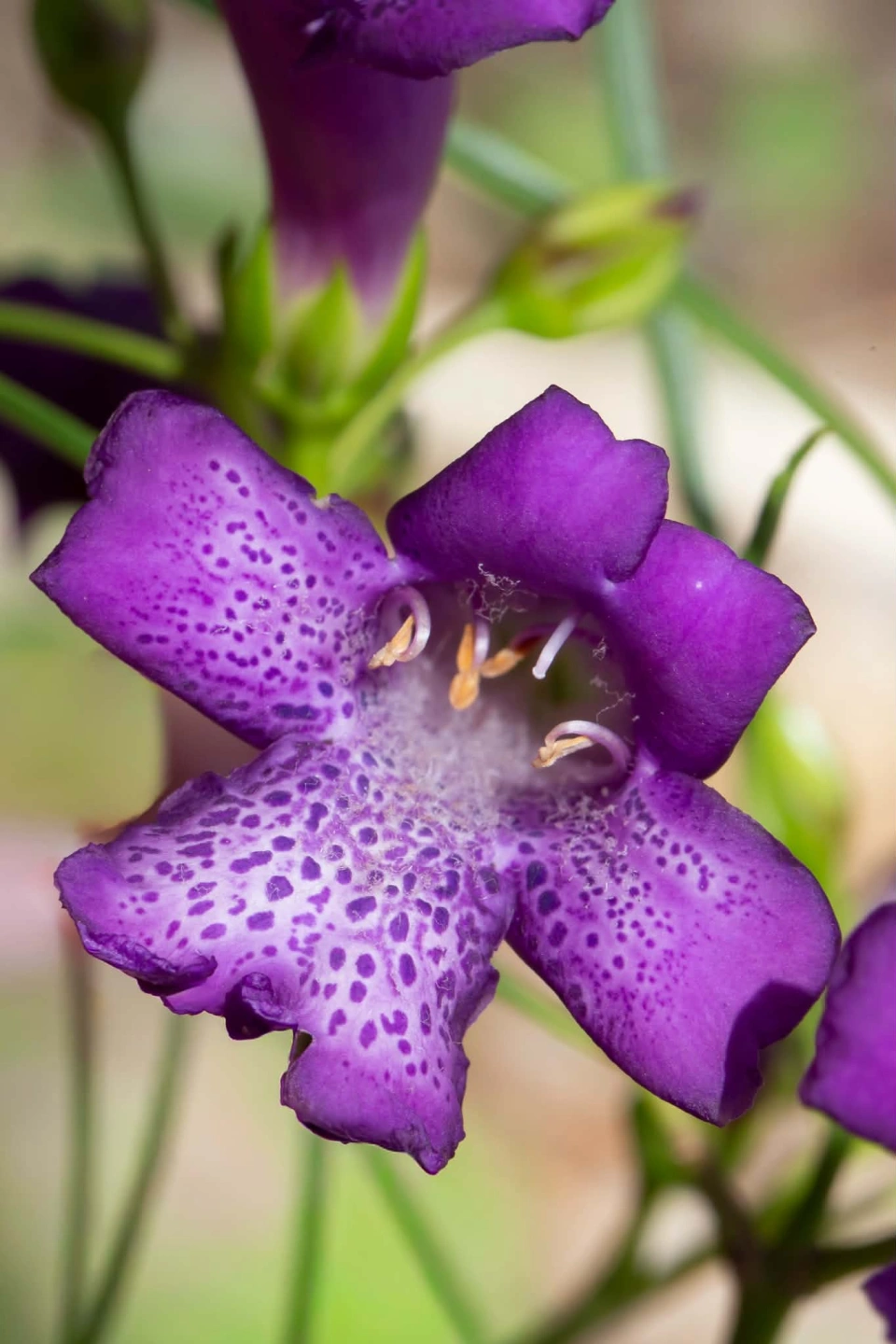
6. Eremophila bignoniiflora × polyclada — purple form
Another outstanding Bignoni hybrid, known for its exceptionally large flowers.
Unlike the white-flowered form, this one produces spectacular deep purple blooms.
Its flowers are among the largest seen in the Eremophila genus.
7. Eremophila bignoniiflora × purpurascens
Growing up to approximately 5 metres tall, it produces vivid deep pink flowers.
8. Eremophila bignoniiflora × viscida
Growing up to approximately 6 metres, this large hybrid produces rich, deep purple flowers.
It loves a sunny position and brings a dramatic splash of colour to the landscape.
Conservation Status
Despite its widespread distribution across Australia, Eremophila bignoniiflora has different conservation classifications depending on where it occurs.
In Western Australia, the species has been reported as Not Threatened, reflecting its occurrence within the state's northern regions.
However, in Victoria, the species is currently classified as Endangered under the Flora and Fauna Guarantee Act 1988, according to Royal Botanic Gardens Victoria's VicFlora database.
This highlights an important distinction in native plant conservation. A species may be relatively widespread and secure across much of its natural range yet face conservation challenges in particular states or regions.
The Bignoni is a great example of why protecting local native plant populations and their natural habitats remains so important.
Why we love the Bignoni
The Bignoni demonstrates just how diverse and adaptable Australian native plants can be.
It challenges the assumption that all Eremophila require dry, perfectly drained soil. It produces some of the largest flowers in the genus. And through its many hybrids, it offers an extraordinary range of colours, growth habits and propagation possibilities.
From giant white and lilac-spotted flowers to vibrant pinks and spectacular deep purples, there's plenty to admire.
And that makes the Bignoni much more than just another pretty flower.
Eremophila Native Nursery of WA — celebrating the diversity of Australia's remarkable Eremophila.
IMAGES
These images were taken from our own garden in the Perth Hills of Western Australia, by our daughter Jessica who has developed a love of all things Eremophila!